Chandor and the Braganza Manor
Chandor and the Braganza Manor
The colonial capital of the Portuguese Estado da Índia, this city on the Mandovi in the 16th century was a glittering center—what chroniclers called the Rome of the East. Palaces and cathedrals towered out of stone and lime, their domes and steeples reflected on the sluggish water. The quays swarmed with merchants from Lisbon, Arabia, and Malacca bearing silks. spices and faith. Today, the city is more subdued, with avenues flanked by mango trees and ruins, but the air remains electric with grandeur—it is as if the past won’t let itself be silenced.
The Basilica of Bom Jesus hosts the silver casket of St. Francis Xavier, the missionary who went sailing across Asia and whose relics to this day continue to attract pilgrims from all parts of the world. The basilica, with its gilt altars, carved cherubs, and pillars wrapped in a riot of green leaf vines, is both an homage to baroque piety and a monument to the fervor with which Portuguese missionaries shaped their faith onto Goan soil. Nearby, a bell tower watches over centuries of worship, rebellion, and renewal at the Sé Cathedral, one of Asia’s largest churches.
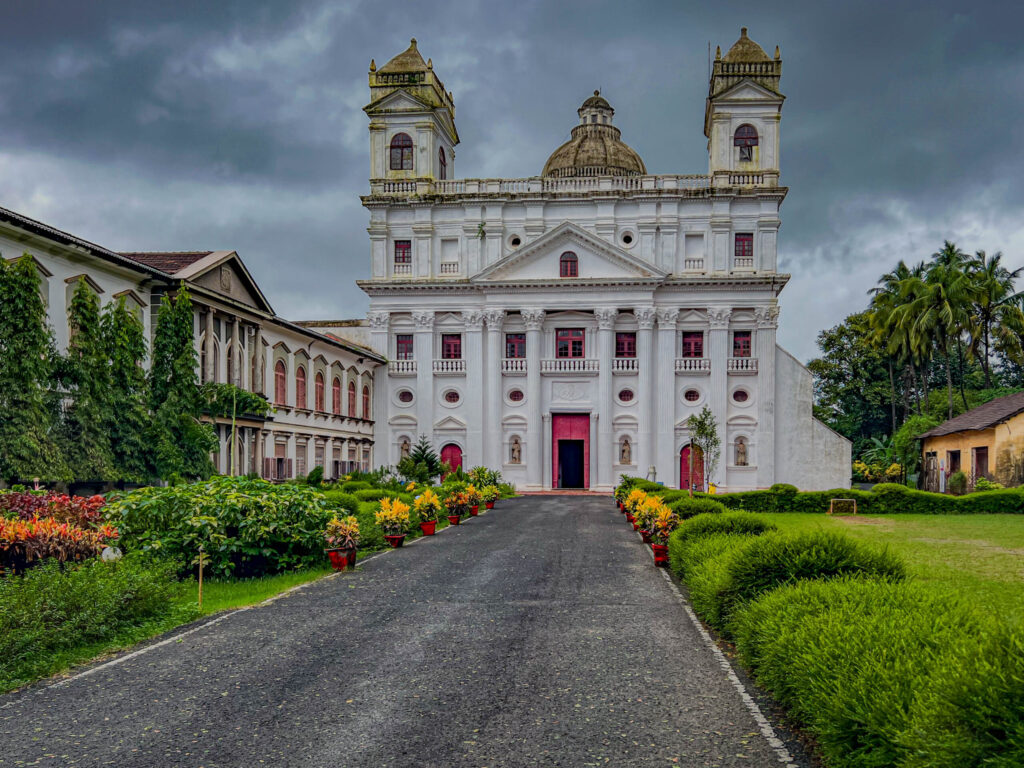
On the other side of the square looms the Church of St. Cajetan, its dome a replica of St. Peter’s in Rome; it is an intentional reminder that a bit of Europe itself had been transplanted into India. Inside, the pale light filters through arch windows, illuminating Corinthian columns that look almost incongruous against the tropical sky outside. All of these monuments sing the same story in different keys: of power and piety, conquest and community, and splendor and perseverance.